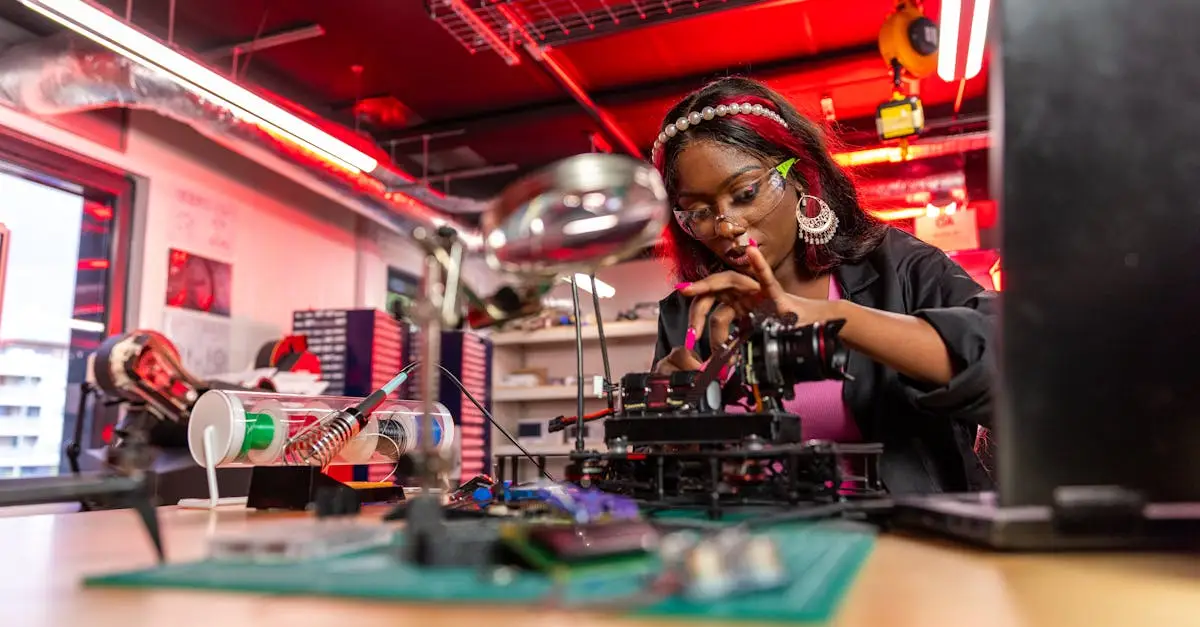
Forty-seven percent of global manufacturing now runs on smart systems. AI agents are replacing rule-based automation. Cobots are outpacing industrial robots. This is your complete, data-driven guide to the 10 automation initiatives every manufacturer must prioritise in 2026 — with an Australian outlook.
Finance Trends · FFDUpdated May 2026⏱ 14 min readReviewed by Industry Analyst
⚡ Quick Answer
The top manufacturing automation trends in 2026 are agentic AI, AI Vision systems (prioritised by 41% of manufacturers), cobot adoption (market now $11.3B), digital twins, IIoT sensor networks, edge-cloud hybrid computing, prescriptive maintenance, and cybersecurity for OT environments. 47% of global manufacturing operations have integrated smart systems as of early 2026, with AI driving average efficiency gains of 31% (A3/ITR Economics, 2026).
🏭
47%
Global smart manufacturing adoption 2026
🤖
$11.3B
Cobot market value 2026 (+28% YoY)
⚡
31%
Avg efficiency gain from AI-driven control
🎯
41%
Manufacturers prioritising AI Vision in 2026
👷
86%
Employers naming AI as primary transformation driver (A3)
Manufacturing is living through the most consequential period of automation adoption in a generation. Not because of hype, but because the economic pressures forcing it — persistent labour shortages, energy cost volatility, margin compression, and increasingly automated global competitors — have all intensified simultaneously. By early 2026, 47% of global manufacturing operations have integrated smart systems, representing a 12-percentage-point jump in a single year. Over 8,500 facilities have fully deployed IIoT architectures since January 2026 alone.
The character of manufacturing automation in 2026 is fundamentally different from previous waves. Traditional automation replaced specific manual tasks with dedicated machinery executing fixed programmes. What is being deployed now — agentic AI, digital twins, collaborative robot systems, and prescriptive maintenance platforms — creates manufacturing environments that learn, adapt, self-optimise, and recover autonomously. The transition from "automated" to "intelligent" manufacturing is not a metaphor. It is the measurable, deployable reality of 2026.
This guide maps the ten automation initiatives that the most current industry data — from the Association for Advancing Automation (A3), ITR Economics, Manufacturing Dive, IIoT World, and AutoNex — identify as the highest-priority investments for manufacturers in 2026. Each initiative is assessed for adoption rate, business impact, implementation complexity, and relevance to the Australian market.
Section 01
Why 2026 Is the Break Point for Manufacturing Automation
The convergence of four pressures making automation a survival imperative, not a competitive nice-to-have
"2026 is not a single turning point. It marks the beginning of a five-year transformation that will separate the leaders from the laggards. The manufacturers that invest now are building a performance gap their manual competitors will find structurally impossible to close by 2030."
— Rock River Automation, Upcoming Industrial Automation Trends 2026 (November 2025)
The labour gap is structural, not cyclical.The Association for Advancing Automation's 2026 member survey identifies a 425,000-worker shortage in US manufacturing alone. Australia faces a similar structural deficit in skilled trades, compounded by an ageing workforce and insufficient replacement pipelines. Automation initiatives are the primary — and in many regional areas, the only — viable response.
ITR Economics' "profitless prosperity" warning. Industrial activity is growing at 1.3–1.5% but margins are simultaneously squeezed by the "labour-price cycle": as labour becomes scarcer and more expensive, inflation embeds in production costs, reducing profitability despite higher revenues. ITR Economics frames automation as the only structural mechanism to break this cycle — replacing rising labour cost inputs with fixed-cost automation that delivers compounding productivity gains.
AI has crossed from pilot to production.Manufacturing Dive reports that 58% of manufacturers are already using physical AI — cobots, AI-vision systems, robotic arms — in production alongside humans, with 80% planning to expand usage within two years. Nvidia CEO Jensen Huang declared at CES 2026 that "the ChatGPT moment for physical AI is here" — marking the shift from R&D to commercial deployment across manufacturing sectors.
The technology cost curve has decisively crossed. Entry-level cobot systems now start at $5/hour lease arrangements. Cloud-native MES platforms are accessible at SME price points. AI quality inspection cameras deploy on existing production lines with standard interfaces. The capital barrier that historically restricted advanced automation to tier-one manufacturers has been substantially removed — making 2026 the year mid-market and SME manufacturers can realistically access capabilities previously available only to global giants.
Section 02
10 Top Manufacturing Automation Initiatives in 2026
Ranked by current adoption priority from the A3 2026 member survey and corroborated across IIoT World, Manufacturing Dive, and RTInsights
01Priority
AI Vision & Machine Vision Systems
Quality Assurance · Inspection · Process Control
#1 Priority
The A3's 2026 member survey identifies AI Vision as the top automation priority for 41% of manufacturers — outpacing both Large Language Models and humanoid robotics in immediate factory-floor adoption. AI-powered machine vision systems perform 100% inspection at line speed with accuracy that exceeds human capability and consistency. Cognex's deep-learning systems halved semiconductor false-reject rates in 2026. In an era of "profitless prosperity" where margins are squeezed, AI Vision reduces scrap waste, prevents costly returns, and breaks the labour-price cycle by automating complex visual inspections that previously required expensive, scarce skilled workers. 41% of manufacturers — top 2026 automation priority (A3 survey 2026)
02Priority
Agentic AI — From Automated to Autonomous
Process Optimisation · Self-Healing Systems · LLM Copilots
Critical
HKXYTECH reports that 85% of enterprises are expected to use AI agents to improve productivity and streamline operations. Unlike traditional AI that analyses data, agentic AI reasons, plans, and acts autonomously — adjusting production schedules, rerouting material handling, self-correcting process deviations without human intervention. Large Language Models are the fastest-growing automation segment, with manufacturer interest nearly doubling from 16% to 35% in one year. LLMs are primarily deployed as worker "copilots" — answering maintenance queries, interpreting equipment manuals, and guiding operators through complex procedures in natural language. LLM interest: 16% → 35% in one year (IIoT World A3 survey 2026)
03Priority
Collaborative Robots (Cobots) — Flexible Automation at Scale
Assembly · Packaging · Material Handling · Human-Robot Collaboration
Critical
The cobot market reached $11.3 billion in 2026, reflecting 28% annual growth with 210,000+ units shipped in the past four quarters. 70% of collaborative robot orders now come from non-automotive sectors — food & consumer goods alone witnessed a 51% year-over-year surge in robotics orders. Rock River Automation identifies cobots as the most practical path forward for plants with ageing workforces — they amplify existing workers rather than replacing them, free operators from repetitive tasks, reduce strain and injury risk, and are flexible enough to be reprogrammed for different products without the retooling delays of traditional fixed automation. Industry experts predict cobot adoption will surpass traditional industrial robots by 2028. Cobot market: $11.3B · 28% annual growth · 70% orders from non-automotive 2026
04Priority
Digital Twin Deployment & Virtual Commissioning
Simulation · Process Optimisation · Commissioning · Predictive Modelling
High
Digital twin simulations now enable virtual commissioning before physical installation, reducing on-site commissioning time by an average of 52% — 6 to 8 weeks saved per large-scale project — and cutting startup error rates by 67%. Over 4,200 facilities reported successful digital twin deployments in 2025 alone. Siemens' $10.6 billion acquisition of Altair in December 2024 specifically targeted advanced simulation capabilities, validating digital twin technology as a tier-one strategic investment. Engineering teams using digital twins focus on optimisation rather than troubleshooting — shifting from reactive problem-solving to proactive performance improvement across production, maintenance, and supply chain planning. Virtual commissioning: -52% on-site time · -67% startup errors · 4,200 facilities deployed 2025
05Priority
IIoT Sensor Networks & Real-Time Visibility
Connectivity · Monitoring · Data Foundation · Predictive Systems
High
IIoT sensor networks form the data foundation without which every other automation initiative fails. Plants are deploying sensors across vibration, temperature, throughput, cycle times, energy draw, operator activity, and alarm behaviour — creating real-time operational visibility that exposes hidden losses that manual monitoring misses entirely. Rock River illustrates this precisely: "A single stuck photoeye on a packaging line can quietly bleed minutes every hour. Visibility exposes losses like that instantly." 53% of enterprises have integrated IoT solutions, with private 5G networks enabling ultra-low-latency IIoT deployments in environments where Wi-Fi reliability was previously insufficient. Plug-and-play IIoT platforms like Factbird (which raised DKK 35 million in April 2025) are extending real-time production analytics to small manufacturers without complex integration. 53% enterprise IIoT integration · Private 5G enabling ultra-low-latency deployments 2026
06Priority
Prescriptive Maintenance — Beyond Predictive
Asset Reliability · Downtime Reduction · Parts Optimisation
High
Maintenance has evolved through three stages: reactive (fix after failure), predictive (identify when failure will occur), and now prescriptive — AI systems that not only predict failure but recommend the specific optimal action, account for available spare parts, current production schedule, and technician availability to schedule maintenance at the best possible moment. AI-driven automation systems are reducing unplanned downtime by up to 43%. ABB's Ability Genix platform has grown nearly 5× over five years by delivering precisely this capability. For Australian manufacturers, where remote operations and supply chain constraints make unplanned downtime disproportionately expensive, prescriptive maintenance ROI is typically measurable within the first operational year. Prescriptive maintenance: -43% unplanned downtime · ABB Genix platform 5× growth over 5 years
07Priority
Edge-Cloud Hybrid Computing Architecture
Real-Time Control · Analytics · Data Architecture
High
The edge-cloud hybrid architecture gives manufacturers a "responsive nervous system." Edge computing handles real-time control decisions locally — eliminating cloud latency for time-sensitive automation responses (conveyor control, robotic vision, safety systems). Cloud handles aggregated data analysis, AI model training, cross-site benchmarking, and executive dashboards. RTInsights confirms that advances in standardised industrial connectivity and edge computing architectures are enabling seamless data flow across production environments at a scale and cost not previously achievable. Cloud deployment in manufacturing automation is growing at 15% CAGR — the fastest-growing deployment segment in the broader industrial automation market. Cloud automation: 15% CAGR — fastest growing deployment segment 2026
08Priority
Humanoid & Autonomous Mobile Robots
Logistics · Complex Assembly · Materials Handling
Emerging Fast
Manufacturing Dive reports that interest in humanoid robots climbed to 13% for 2026 as Hyundai Motor Group debuted its Atlas humanoid for production settings and Audi and BMW both piloted humanoids in their operations. Autonomous Mobile Robots (AMRs) are already mainstream in logistics and warehousing — adapting to dynamic environments without fixed navigation infrastructure. The convergence of vision, sensing, cobots, and AI is enabling more mobile robots to work flexibly alongside humans in environments designed for people, without the expensive facility modifications traditional automation required. Omdia analysts anticipate significantly more case studies of humans and mobile robots collaborating in flexible environments through 2026–2027. 13% of manufacturers targeting humanoid robots for 2026 · AMRs mainstream in logistics
09Priority
OT/IT Cybersecurity for Automated Systems
SCADA Security · Zero Trust OT · ICS Protection
Non-Negotiable
Every automation initiative expands the cybersecurity attack surface. Manufacturing Dive documents the real cost: Jaguar Land Rover suffered a cyberattack in 2025 that halted production for five weeks and cost $260 million. Asahi suspended all operations following a ransomware attack that forced the company back to pen and paper. 59% of manufacturing and supply chain executives are now adopting AI specifically to augment cybersecurity capabilities (WEF 2026 survey of 837 executives). Schneider Electric's February 2025 release of SCADAPack firmware with role-based access control reflects the growing convergence of IT and OT security requirements. For Australian manufacturers, SOCI Act critical infrastructure obligations make OT cybersecurity a compliance requirement alongside a risk management imperative. See our full analysis in the cybersecurity landscape 2025 report. Jaguar Land Rover: $260M cyber loss · 5-week shutdown 2025 · 59% adopting AI for OT security
10Priority
Sustainable & Energy-Optimised Automation
Green Manufacturing · Energy Monitoring · ESG Compliance
Growing
A European automotive case study documented in AutoNex's 2026 report achieved a 22% reduction in energy use through AI-optimised drives alongside a 28% OEE improvement from a unified automation stack. RTInsights confirms that rising energy costs are compelling manufacturers to deploy AI and IIoT specifically for energy optimisation — identifying inefficiencies in real time, using digital twins to simulate energy-saving changes, and deploying automated load balancing across production schedules. In Australia, APRA's climate risk supervisory expectations and the federal government's Sustainable Finance Taxonomy are creating regulatory pressure that makes energy-efficient automation a compliance investment as well as an operational one. AI-optimised drives: 22% energy reduction · EU automotive case study (AutoNex 2026)
Section 03
Manufacturing Automation Adoption Data 2026
AI Vision Systems
41%
IIoT Integration
53%
Smart Mfg. Systems
47%
LLM / Agentic AI
35%
Cobot Deployment
Growing
Physical AI (Deloitte)
58%
Digital Twins
4,200+
AI Cybersecurity (OT)
59%
Section 04
Automation Initiative Priorities by Sector
Sector
Top Initiative 2026
Key Driver
Growth Signal
Automotive
AI Vision · Cobot assembly · Digital twins
EV model proliferation, multi-variant production
Rebounding — tech-led
Food & Consumer Goods
Cobots · Vision · Flexible packaging
Labour shortages, hygiene compliance
+51% robotics orders YoY
Logistics & Warehousing
AMRs · Vision · Automated picking
E-commerce volume, last-mile pressure
14.2% CAGR vision systems
Semiconductors & Electronics
AI Vision · Precision robotics · DT
CHIPS Act $52B, reshoring
Fastest growing discrete
Pharmaceuticals
MES · Traceability · Sterile automation
Biologics complexity, regulation
8.8% CAGR — fastest process
Mining & Resources
Autonomous vehicles · Remote ops · IIoT
Hazardous environments, labour scarcity
AU global leader
Section 05
Benefits Quantified & Barriers to Address
✅ Quantified 2026 Benefits
31% average efficiency gain from AI-driven control systems (A3/ITR 2026)
43% reduction in unplanned downtime via prescriptive maintenance
52% reduction in commissioning time using digital twin virtual commissioning
28% OEE improvement in integrated automation stack deployment (EU auto case study)
22% energy cost reduction through AI-optimised drives and monitoring
34% rise in labour productivity in human-cobot mixed environments
67% reduction in startup error rates with digital twin commissioning
47% smart manufacturing global adoption — 12-point jump in one year
⚠️ Barriers Manufacturers Face
19% cite lack of skilled workforce as top barrier to automation adoption (A3 2026)
Capital intensity — multi-year payback for full smart factory programmes
Legacy integration — older equipment with proprietary protocols resists digitalisation
OT cybersecurity — 39% cite cyber risk as primary automation hesitation
Data architecture — smart factories generate terabytes/day, requiring robust pipelines
"Profitless prosperity" — high activity but squeezed margins reduce capex appetite
Vendor dependency — platform lock-in from major automation stack commitments
Workforce change management — retraining operators for digital-physical collaboration
Section 06
Implementation Roadmap for Manufacturers in 2026
A phased sequencing framework based on ROI speed, dependency relationships, and risk profile
Before any AI-driven automation can deliver value, you need data. Deploy IIoT sensors on critical equipment to capture vibration, temperature, cycle time, throughput, and energy data. Establish a data historian or edge-cloud platform to make that data accessible. This phase has the lowest cost, fastest deployment, and generates immediate operational insights — often revealing hidden losses that pay back the investment within weeks.
Phase 2 — Months 3–9 · Quick Wins
AI Vision for Quality + Prescriptive Maintenance
With IIoT data flowing, deploy AI vision for quality inspection on your highest-defect production line first, and prescriptive maintenance on your most failure-critical equipment. Both have 6–12 month payback horizons. The quality inspection ROI is immediate and visible — reduced scrap, rework, and customer returns. Prescriptive maintenance ROI comes through avoided downtime events, which should be measurable against the prior-year baseline within two quarters.
Phase 3 — Months 6–18 · Core Automation
Cobot Deployment + OT Cybersecurity Hardening
With data quality established and quick wins generating returns, deploy cobots on the highest-volume repetitive tasks — typically assembly, pick-and-place, packaging, or material handling. Simultaneously harden OT cybersecurity as automation connectivity expands. These two must be co-sequenced: every cobot deployment adds to the attack surface, and securing it post-deployment is significantly more costly than doing it concurrently. For Australian manufacturers, ensure SOCI Act and ASD Essential Eight compliance for all OT additions.
Phase 4 — Months 12–36 · Intelligence Layer
Digital Twins + Agentic AI + Edge-Cloud Architecture
The intelligence layer builds on the foundation and quick win phases. Digital twins require high-quality IIoT data and established process understanding — both built in the earlier phases. Agentic AI systems require sufficient training data from your specific operations to perform reliably. Edge-cloud architecture requires cloud-native software that your earlier platform investments should now support. This phase delivers the highest long-term value but requires the foundation phases to be solid first.
Phase 5 — Ongoing · Optimisation
Continuous Improvement + Sustainable Automation
Smart factory automation is not a one-time project — it is a continuous programme. Use the AI and data infrastructure built in previous phases to run ongoing energy optimisation, supply chain integration, workforce development, and sustainability reporting. Revisit the automation roadmap annually as new technologies mature — humanoid robotics and post-quantum cybersecurity are both approaching commercial viability within the 5-year horizon of any roadmap started today.
Section 07
Manufacturing Automation Trends in Australia: 2026 Outlook
🇦🇺 AUSTRALIA — MANUFACTURING AUTOMATION 2026
Key Drivers & Policy
Future Made in Australia Act — incentives for automation-enabled domestic manufacturing and reshoring
SOCI Act expanding critical infrastructure obligations to automated OT systems in manufacturing
ASD Essential Eight compliance requirements extending to ICS/OT environments
Advanced Manufacturing Research Facility (AMRF) at RMIT — Industry 4.0 capabilities for SME co-development
AMTIL and Australian Industry Group grants and training programmes for automation adoption
CSL, AstraZeneca AU investing in pharmaceutical smart manufacturing at Victorian facilities
CSIRO leading globally in agricultural robotics, precision automation, and AI-driven farming
Sydney/Melbourne/Brisbane logistics hubs deploying AMRs for e-commerce fulfilment at pace
Defence automation investment growing under AUKUS and NLIAS programmes
Australian energy sector deploying prescriptive maintenance for grid reliability and renewable asset optimisation
✅ Australian SME Entry Points 2026
For small and medium Australian manufacturers, the most accessible 2026 entry points are: plug-and-play IIoT sensor platforms (Factbird's subscription model, from under $500/month for basic machine monitoring); cobot leasing (Standard Bots RO1 from $5/hour, Universal Robots available through KUKA and ABB Australian distributors with turnkey installation); cloud-based MES via SaaS (FactoryTalk Cloud, accessible from 20+ employees); and AI vision cameras deployable on existing lines through Cognex and Keyence Australian distributors. The AMTIL automation grants directory and the Advanced Manufacturing Growth Centre (AMGC) provide co-investment funding that can reduce upfront costs by 30–50% for qualifying SME programmes.
Manufacturing Automation Trends 2026: 10 Initiatives to Know
Meta Description (157 chars)
The top manufacturing automation trends in 2026: agentic AI, cobots ($11.3B market), digital twins, IIoT, and prescriptive maintenance — with real data and an Australian action plan.
URL Slug (update from 2024)
manufacturing-automation-trends-2026
Secondary Keywords
automation initiatives manufacturers 2026, top manufacturing automation 2026, industrial automation trends 2026, AI in manufacturing 2026, smart factory 2026
Schema Type
Article → BlogPosting
OG Title
Manufacturing Automation Trends 2026: 10 Initiatives Every Manufacturer Must Know
What are the top manufacturing automation trends in 2026?
Based on the Association for Advancing Automation's 2026 member survey and corroborating data from IIoT World, Manufacturing Dive, and AutoNex, the top manufacturing automation trends in 2026 are: AI Vision systems (prioritised by 41% of manufacturers), agentic AI and LLM copilots (interest doubled to 35% YoY), collaborative robots (cobot market now $11.3B, 28% growth), digital twin deployment, IIoT sensor networks and real-time visibility, prescriptive maintenance, edge-cloud hybrid computing, humanoid and autonomous mobile robots, OT cybersecurity, and sustainable/energy-optimised automation. Smart manufacturing adoption has reached 47% of global facilities — a 12-point increase in one year.
What is the difference between predictive and prescriptive maintenance?
Predictive maintenance uses IIoT sensor data and machine learning to identify when equipment is likely to fail — giving advance warning before breakdown occurs. Prescriptive maintenance goes further: it not only predicts failure but recommends the specific optimal action, accounts for available spare parts, considers the current production schedule, and schedules the maintenance at the best possible time to minimise production impact. Prescriptive maintenance is the 2026 standard; predictive is the 2020 standard. The distinction matters for ROI — prescriptive systems generate significantly more value by optimising not just failure prevention but the entire maintenance workflow around it.
Are cobots replacing workers in manufacturing?
No — the evidence consistently shows cobots amplify workers rather than replace them. Labour productivity in human-cobot mixed environments has risen by 34% (AutoNex 2026). Cobots are deployed primarily on repetitive, physically strenuous, or hazardous tasks — freeing operators to manage multiple production lines, perform quality oversight, handle exceptions, and carry out higher-value work that robots cannot. In a manufacturing labour market with a 425,000-worker shortfall in the US alone and comparable shortages in Australia, cobots are enabling existing teams to maintain production volumes that would otherwise be impossible. 70% of 2026 cobot orders come from non-automotive sectors specifically because these industries struggle most with labour availability.
How should Australian manufacturers prioritise automation investment in 2026?
Australian manufacturers should prioritise based on three criteria: regulatory obligation (SOCI Act and ASD Essential Eight OT compliance are non-negotiable), fastest ROI (AI vision and prescriptive maintenance typically pay back within 6–12 months), and strategic position (cloud core migration, IIoT data infrastructure, and cobot flexibility investments create the foundation for every subsequent initiative). The AMTIL automation grants directory and the Advanced Manufacturing Growth Centre (AMGC) provide co-investment funding and advisory support that can significantly reduce upfront capital requirements. The federal government's Future Made in Australia Act incentives make 2026 a particularly well-timed moment for domestic manufacturing automation investment.
What is agentic AI and how is it different from traditional manufacturing AI?
Traditional manufacturing AI analyses data and produces insights or alerts — a human then decides what to do. Agentic AI goes further: it reasons, plans, and takes limited autonomous actions to achieve defined goals, with minimal human intervention at each step. In manufacturing, agentic AI applications include autonomous production schedule adjustment when demand changes, self-directed material rerouting when a machine goes down, automatic quality hold decisions when inspection thresholds are breached, and multi-agent systems that coordinate across the entire shop floor. LLM-based worker copilots — answering maintenance questions, guiding operators through procedures in natural language, interpreting equipment manuals — are the most widely deployed form of agentic AI in manufacturing facilities in 2026.
How does the SOCI Act affect Australian manufacturing automation in 2026?
Australia's Security of Critical Infrastructure (SOCI) Act imposes mandatory cybersecurity and resilience obligations on operators of critical infrastructure — a definition that has expanded to include critical manufacturing sectors. As manufacturers deploy more connected automation (IIoT sensors, cloud-connected SCADA, AI platforms), they bring more OT systems within the SOCI Act's scope. Practically, this means manufacturers must register as critical infrastructure owners if applicable, implement minimum cybersecurity obligations, report significant cyber incidents to the Australian Signals Directorate (ASD), and develop and maintain critical infrastructure risk management programmes. Failure to comply carries significant penalties. Embedding SOCI compliance requirements into every new automation deployment is far more cost-effective than retrofitting compliance onto deployed systems.
FT
Finance Trends — Free Financial Directory
Technology & Industry Editorial Team · Port Macquarie, NSW · Updated May 2026
Free Financial Directory's editorial team researches industrial technology, manufacturing economics, and future business trends for Australian professionals, investors, and business operators. This report draws on primary data from the Association for Advancing Automation (A3) 2026 member survey, ITR Economics 2026 outlook, IIoT World smart factory reports, AutoNex Controls 2026 factory automation analysis, Manufacturing Dive (January 2026), RTInsights smart manufacturing trends 2026, Rock River Automation 2026 outlook, HKXYTECH/PLCS Automation 2026 trends, and Australian Government (SOCI Act, AMTIL, AMGC) publications. All statistics are attributed to primary sources. We do not provide personalised financial or investment advice.
Final Thoughts — Manufacturing Automation in 2026
The data is unambiguous. Forty-seven percent global adoption. Cobots at $11.3 billion and accelerating. AI vision prioritised by four in ten manufacturers. Agentic AI doubling in adoption in a single year. The manufacturing automation trends of 2026 are not predictions — they are measurements of an industry actively transforming, facility by facility, initiative by initiative.
The manufacturers implementing these initiatives today are building operational advantages that compound. A facility that deploys IIoT monitoring today generates the data that makes prescriptive maintenance possible next year. The prescriptive maintenance system that avoids three unplanned downtime events generates the cost savings that fund cobot deployment. The cobot deployment frees operators to focus on digital twin optimisation. Each initiative enables the next — which is why 2026's 47% adoption rate will be 60% by 2028, not because the technology will change dramatically, but because the economic case for joining the leaders rather than lagging behind them grows stronger every quarter.
For Australian manufacturers, the timing has rarely been better: government policy support through Future Made in Australia, accessible SME entry points through SaaS and cobot leasing, and a regulatory environment through SOCI and AMTIL that provides structured frameworks for doing this safely and compliantly. The question is not whether to automate. It is whether to start now or explain to the board in 2028 why you did not.
Disclaimer: This article is for general informational and educational purposes only. Statistics are sourced from third-party research publications as attributed and are accurate as of May 2026. Free Financial Directory does not provide manufacturing strategy, investment, or technology procurement advice. Always consult qualified industry specialists before making capital investment decisions. Regulatory obligations (SOCI Act, ASD Essential Eight) should be confirmed with legal and compliance advisers specific to your organisation's circumstances.
to receive our “Finance Guide PDF.” Please check your inbox for the download link to your complimentary guide. Rest assured, your privacy is paramount to us; your details are safeguarded as per our Privacy Policy.
Finance Guide PDF
Claim Your Free Finance Guide PDF Now
Take control of your finances with our free guide! Learn essential tips and strategies for managing money effectively.